Friday, June 27, 2008

siwa

Phew, sorry it's been a while, but in Siwa I heard a sound I hadn't heard in a long, long time: a modem dialing up. (Remember that? 9600 baud all the way to 56.6k...) So blog posts were pretty out of the question.

Maybe we should start with some quick photos of Alexandria:

Alex is a coastal city on the Mediterranean, and the beach is mighty popular in summer.


On the coast's obvious prominence, where the Lighthouse of Alexandria once stood, is now Qaitbey Fort, a 550-year-old structure made mostly out of blocks from the fallen lighthouse. Clearly the inspiration for Legos:


Here are some kittens I found in a nook in Qaitbey Fort. I don't think I've ever seen a not-cute kitten, but these get extra points: those sky-blue eyes!


Most non-Western countries have stray dogs. Egypt has stray cats. Stray cats are kinda cute. Leah would love it.


I love this fruit juice shop. That's a mango/peach creation, and it's way bigger than it looks in the photo. 5 pounds, which is about $1.


Alex is also famous for its ice cream, apparently. This masterpiece was the most expensive option on the menu. I had it for lunch.


They're still excavating these Greco-Roman ruins they found while digging for the foundation of some building. I'm telling you, Egypt is just bursting with history. And good stuff, too.


Okay, okay, enough photos of Alexandria. What I really wanna talk about here is Siwa.

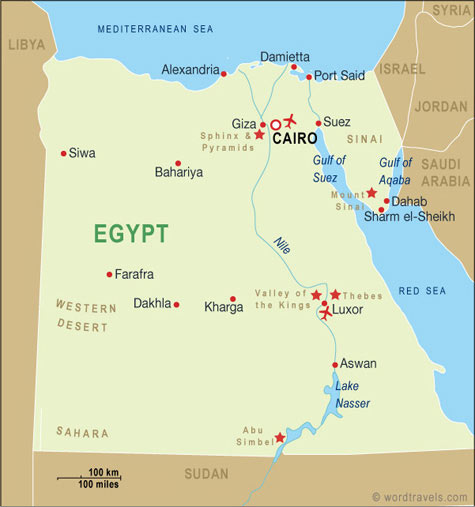
Siwa is an oasis in Western Egypt, near Libya. Modern Siwa centers around the remains of Shali, an enormous mudbrick construction dating from around 1200 (the oasis has been settled since "at least the 10th millennium BC"). The Siwans lived in Shali for over 700 years, building upwards until some structures were five stories high. Then, a freak 3-day rain in 1926 forced the entire town to relocate.

You know how, if you don't live in an earthquake area, your buildings aren't made to withstand earthquakes? Here in the Western Desert, bordering the Great Sand Sea, buildings aren't made to withstand RAIN! The city just melted. It's unbelievable. It looks like it was made of sugar.


(Oases form when a topological depression dips into the aquafer; they are still part of the nearly precipitation-free dessert. The water comes from below, not above.)

It's worth stressing, maybe, that Siwa is smack in the middle of the desert. Coming here, the bus goes through hundreds of miles of rocky, barren nothingness. Then suddenly, so suddenly, there's an army of date palms flush with the greenest fronds. It's so sudden, and so out of place. It's like a fairy tale.

The sunset from atop Shali is everything you dreamed it would be.


And since you have this endless cloudless sky, as soon as the sun dips below the horizon, you can turn around and see the Earth shadow rising up, and it eventually takes over the whole sky and makes night (sorry this photo didn't turn out so well).


Ooh, in that Earth shadow photo, to the right of the rocky mesa, you can see how abruptly the oasis gives way to the sand. It's just palm, palm, palm, saaaaaaaaaand.

You know, it's not just the biota that's so seemingly out of place (or maybe that's just me, anyway); the whole culture here seems translocated from some foreign land five hundred years ago. Here's a Siwan taxi stand.


I KNOW!!!! A taxi is a donkey cart led by a ten-to-fifteen-year-old Siwan boy. Always male, by the way: Siwa is a very conservative place, and the rare times I see women, they're totally, totally covered. We can't decide how they know who's whom, or how the women see out.

Ummm... what else? Oooh, right, Mountain of the Dead!


So yeah, that's the Mountain of the Dead. You know how I got there? A Berber-navigated, donkey-powered single-axle wooden cart-taxi!! Those Bndpsaw cart-taxis are might slow, so you sit and think "I can't believe I'm here" for an extra long time. They're like a light jog pace. But we got there alright.

I kinda flipped out at this place. This is from an email I wrote my folks in my excitement:
--------------------
MY GOD!! I could not get over it. The hill is dotted with holes like an overgrown mole infestation, and each hole leads to a tiny, undorned tomb. They date from 300BC. Most were opened during WWII as Siwa's inhabitants took refuge from the bombing there. Views from the summit could go on the cover of any National Geographic.

A guy comes up to me and asks if I've seen the locked tombs yet. Let's go!

Egypt has a culture of baksheesh, or tipping. I have no idea what to give someone who unlocks a tomb for you. One Egyptian pound (20 cents)? I get it in my front pocket, ready.

We get to a tomb much bigger than any I've seen, and he unlocks the door. Photography is strictly forbidden, so even if I could get my photos onto the blog, you wouldn't see it, but WOWOWOWOWOW!! The 12' by 4' by 7' hallway is COVERED with the kind of paintings they show in books on Ancient Egypt!! I'm just floored! And the guy who let me in obviously likes my reaction. You see Anubis and Isis and Horus and the feather/heart scale and the crocodile/lion/dog devourer beast, and it's covered in hieroglyphs, and the guy starts telling me a bit about what the gods are and why they're here -- but it's basic Egyptology stuff I already know a little about (weigh the heart against the feather of truth, if it's too heavy the beast eats your heart... I've read books and took a pair of The Learning Company classes on Ancient Egypt). I see a panel with the four children of Horus each painted with a jar, and kinda blurt out "canopic jars!" The guy is a bit surprised, and says, "you know Egyptology?" Uh, not really, but a tiny bit? Turns out he's not just a guard, he's an archaeologist here. Suddenly, seeing that, albeit basic, I have a little background on this stuff, he starts going into EVERYTHING! IT'S AWESOME! Reading the hieroglyphs and translating for me, telling me about how they excavated the tomb, explaining why this particular guy is drawn totally sideways (instead of the typically Egyptian legs-sideways torso-facing pose), and all sorts of stuff. Then he takes me to another locked tomb, larger but less adorned than the first, and explains everything about it. Wild stuff! It's the mountain's very oldest tomb, from about 580BC!!! I can't get a handle on these dates (you know, when that tomb was being built, the pyramids were almost exactly 2000 years old?!??!?!)

After all this, when I'm leaving, I get five pounds from my pocket (one dollar, but a substantial baksheesh, I think) to tip him, and he flatly refuses. Enjoy Siwa, he says.
--------------------

Something about this, in a two thousand three hundred year-old tomb on the Mountain of the Dead... it just made me smile:

So that was incredible. The history here is just... I can't deal with it. Ooooh, oh, I forgot. This was just the sign beneath an headless, unadorned sphinx on display near the Greco-Roman theater in Alex:


That's the kind of history they have here. Built in eighteen hundred BC (some of the numerals on this keyboard don't work), reworked in twelve hundred BC by Ramses the Great, then chopped up and used as masonry. Too many sphinx here, I'm telling you.

This oasis is paradisaical, no doubt, but let's see some desert! So Lea and Richard and Patrick and I headed out with Muhammed and Muhammed for a two day one night safari.

Nearly everyone I met in Siwa was named Muhammed. They all wear the long white Arab Muslim getup, all have short dark curly hair, similar features. It's honestly hard to tell them apart. I guess the game Guess Who? never caught on here. Is it Muhammed?

First stop on the safari, just outside the oasis, are some prehistoric prints. I have no idea if it's the famous one, but either way, my foot's bigger (and has a better sandal tan):


After that, off to an outcropping just rife with fossils. The Sahara used to be underwater (really? I thought it was marshland, or something wetter, but not marine... but I guess I'm wrong), and as the wind sandblasts this limestone outcropping (I think it's limestone...) and makes more sand, the harder-than-limestone fossils are just extruded from the rock. With every step you're crunching little shells and sand-dollar-looking things undertoe. Everything here seems so out of place.


How's this cool, freshwater pool for out of place?


That was amazing.

The Great Sand Sea is really aptly named. These dunes are HUGE, and they ebb and flow, and like waves, some have rolling tops but some are sharply ridged.


I had plenty of time to take that photo, since when you think it's gonna be rolly-top, but it's sharp-ridge, the jeep gets waaay stuck.


That took a good twenty minutes of digging, and the sun is BLAZING, and the sand is like you could cook bread on it. Yikes.

As the sun sets, the sky glows this unbelievable palette of reds and purples and oranges and blues, and the temperature drops about thirty degrees (to seventy-five), and the sand becomes cool to the touch.

You know, I've always been a sandboarder at heart.


Seriously, sandboarding down the dunes was a TON OF FUN! Now I've never snowboarded or sandboarded before in my life, but it was pretty easy and so so SO FUN! One minor problem was that the soft sand of the dune gives way to compact, kinda hard sand at the bottom, and that's of course where you faceplant. The other minor problem was that there's no sandlift, you know? And walking up a two-hundred foot dune is effort, man! One step forward, slide nine-tenths of a step back. It took forever.


We set up camp at the base of the sandboarding dune, and wow. Just wow.


The night is just so quiet and peaceful and beautiful. Not a sound. I mean not a single whisper. Just silence, and a million stars. Mars was so bright. It really felt like being afloat in a great sand sea. That was the best night of my trip.

You know, on a clear night, it's not too hard to find satellites? They're like little stars that don't twinkle, and they move at an unbelievably constant pace through the darkness. We found lots of satellites that night.

Now I'm in Cairo. I'll write up about it later, but this rooftop view just made me think of those satellites, and the desert and Siwa.


I love Egypt.

I love every grain of sand, every braying donkey, every cloudless night and glass of tea (yes, glass) and glowing white robe and mudbrick home and pharoanic painting and excavated tomb and fairy-tale sunset and smiling Muhammed.

I

LOVE

EGYPT

I jut love it with every cell in my heart.

Saturday, June 21, 2008

egypt rocks

Unfortunately, the one thing that does NOT rock in Egypt (er, specifically Alexandria) are the internet cafes. I can only find this one, and the computer is molasses slow, and the keyboard is molasses sticky. So hopefully I can fill this out later, but for now, just a skeleton post. It doesn't convey any sense of what it's like to be in Egypt (sorry), 'cause for that I need photos and a less sticky keyboard and some more time. But I'll try to get some excitement across.

EGYPT ROCKS!!

I've been excited about Egypt since this trip started -- like everyone on Earth, I'm an Ancient Egypt dilettante -- and I built it up to impossible expectations. So I prepare myself on the plane to lower those hopes; as Joshua always says, satisfaction is outcome over expectation. I get here, and...

1 - Traffic and honking are worse than the US, sure, but I was just in India. Coming from India, this is sleepy-time land. Alright!

2 - Folks are so nice! Part of this is, again, a comparison with India's flood of touts and liars (hey, tons of Indians were wonderful to me, but...). The other part is that, while I don't look particularly Egyptian, I don't look particularly NOT Egyptian, so the minority of crooks (every touristy place has 'em) don't flock to me and ruin my wandering. And when I was having this little daydream thinking I could actually live in Alexandria for a year, this random guy on the street gives me a high five! It was a walk-by high-fiving!

3 - Egypt is cheaper than I expected. My room is $6 a night. A great fruit shake overlooking the Mediterranean runs $1. I like this!

4 - Traveling within Egypt... lemme explain. I want to go from Alex to Siwa, and it's a $6, 8-hour overnight bus. HAHAHA! 8 hours, to go across half the country?! I could've kissed the ticket guy! Getting across a quarter of India was 31 hours with a transfer at Delhi, and this is an overnight 8-hour jog? Baby!

5 - The HISTORY!!!! I'm gonna mush this in with #6: the DIVING!! I dived Alexandria's harbor yesterday. Ummm...

- BLOCKS AND PIECES OF COLUMNS FROM THE LIGHTHOUSE OF ALEXANDRIA !!!!!!!!!
- SPHINXES, 4 OF THEM !!!!! I RODE A SPHINX UNDERWATER!!!!
- 5 OCTOPI!!!! ONE WAS EATING A CRAB!!!!
- A BRITISH WWII PLANE!!!!! FANTASTIC CONDITION, PILOT MASK STILL THERE, MACHINE GUN ON THE WING AND BULLETS ALL AROUND, BEST WRECK I'VE EVER SEEN !!!!!
- COLUMNS FROM CLEOPATRA'S TEMPLE, AND HER TABLE, YOU CAN FEEL THE GRANITE !!!!!!!
- 2000 YEAR OLD URNS, HALF BURIED IN THE SAND !!!!!!

UNBELIEVABLE DIVING!!!!!

Egypt has so much history it just piles on top of itself. From Narmer uniting the country to the first fall (I don't remember if this one or the next one is the "Intermediate Period") to the Middle Kingdom, then another fall with the Hyksos, then the New Kingdom, and then the Greek period with Alexander, then Ptolemy the umpteenth finally capitulates to Rome and the whole Cleopatra affair? That's three THOUSAND years of history, and we're still in BC! Then there's this big chunk I don't know about at all (and this computer doesn't allow multiple tabs/windows, so I can't look it up), but then there's the rise of Islam and then Muhammed Ali (the original... I think), and I'm hazy on English and French colonialism, then WWII with Rommel and the Afrika Corps, and the formation of Israel and a couple of wars there, and then I came to say hi. So much history in one little country it doesn't even fit. The second dive, amidst the ruins of 2000-year-old Cleopatra's Temple (I know!), in the shadow of 500-year-old Qaitbey Fort (I know!), is the best-preserved wreck I've ever seen: a British WWII plane (I know!). SO MUCH HISTORY. WHAT A STORY!! How can you not love Egypt?!

I LOVE this place. I LOVE THIS PLACE!

wow

wow

WOW

I'm going to Siwa tonight! Oh boy oh boy oh boy oh boy!!!!

Tuesday, June 17, 2008

dubai

So after I get off the plane at Dubai International, and after immigration and customs (UAE's stamp is boring), a driver is waiting with my name on a clipboard. The spotless Lincoln Towncar takes me to Savoy Park Hotels, a place that would be fancy pantsy even if I weren't coming off a month of $6.11 a night rooms in India (yup, that's the actual average). As I'm signing in, a clerk rushes up with a glass of apple juice on a tray, sir. I'll show you to your room, sir. Right this way, sir.

That's my apple juice on the counter.


Waitaminute, waitaminute. Hold up. Drivers, fancy hotels, welcome drinks? What happened to the budget backpacker, stepping over homeless people to get to the rancid squat toilet down the hall?

Before that, I'd like to tell a kinda unnecessary but fascinating (I think) story, which, for the sake of brevity, I'm going to be skipping a bit and not checking my facts. (Having just read over this, I didn't write it well at all. Sorry. You'll just have to trust it was really engrossing when told to me over lunch.)

* * *

Britain used to control an enormous portion of the globe. Parts of modern America, Canada, India, Pakistan, Bangladesh, huge swaths of Africa, Australia, New Zealand, parts of the Arabian Peninsula, all sorts of islands and outposts and kingdoms -- they all owed allegiance to the crown. Truly, the sun never set on the British Empire.

In the 19th century, needing workers to build infrastructure in British central Africa, Britain forcibly relocated tens of thousands of Indians to Uganda and Tanzania, Kenya and Sudan, where they toiled in horrific conditions to clear jungle and lay railroad. (Some Indians might call WWII's Death Railway a karmic atrocity.) Among those dislocated for forced labor were the Kotechas, a village family from Gujjarat.

Fast forward 80 years, and the Kotechas have established themselves as a middle class family. Indians living in Uganda, they have five children, all of whom go to school, eat well, and have a generally happy lot in life.

In 1971, just months before the seven emirates just northeast of Saudi Arabia join to form the UAE, a violent coup in Uganda put militant extremist Idi Amin in power. The dictator, whose self-proclaimed titles include "Lord of All the Beasts of the Earth and Fishes of the Sea," demands racial purity: all non-Africans will be purged. The Kotechas are given just days. Change is fast, and violent.

"There is nothing in this world like an African army. They killed men, raped women, mutilated children."

The Kotechas' eldest son, Ashok (ah SHUK), is shot in the leg by a soldier. The Kotechas are evacuated to an English refugee camp, but 17-year-old Ashok, being over 16, a fourth generation Ugandan, and without a British passport, slips through the UN's many sieves to evacuate those in peril. For weeks he tries to get the family savings out of the bank, to send possesions overseas. He is unsuccessful. Ashok is finally recognized by the UN as a refugee in danger, and is relocated to an Italian camp. He is alone in a refugee camp, without his family. Three times a day, he waits in an endless line for food. There is never enough. Nine months.

"When you are hungry, you think of nothing but food. You must keep yourself occupied, or you go mad."

Ashok applies, repeatedly, for permission to emmigrate to India. Eventually, he recieves an affirmative response, and is reunited with his family, who are waiting. Having lost everything -- money, possessions, home, country -- and not knowing what to do, Ashok takes out student loans to attend college. Saudi Arabian Glass Company, LTD, offers him a well-paying job in Dubai, which will soon be famous as UAE's most financially successful emirate. Ashok is good at what he does. He wears a suit, buys a house, and eats what and when he wants. He is not wanting.

* * *

When I was planning this trip, I learned a lot about geography. For example, if you fly from Mumbai to Alexandria, you pass right over Dubai. Hey, how about I stop there for a few days? I know, it's not exactly suited to the budget backpacker, but for 3 days, I'll splurge.

My parents have some wonderful friends, and when the Berlins heard of my itinerary, they said they had a friend slash business contact in Dubai; we should get in touch. Berlin Packaging is one of Saudi Glass's larger accounts.

This is how I found myself in Dubai, being taken to lunch by Mr. Ashok Kotecha, a Uganda-born former refugee, and story-book successful businessman.

Mr. Kotecha's good-humour and optimism belie the bullet still in his leg. He could have taken me to lunch. He could have been out of town, or too busy, or emailed me advice on Dubai. He could have done all sorts of things, but I never expected this.

Drivers at the airport, a luxury hotel with afternoon tea, lunches, dinners, tours, museums, desert safari and belly dancers. Mr. Kotecha's generosity exemplifies above and beyond. In an email he sent just before my arrival, he wrote "You have yet to have a taste of Indian hospitality." Backpacking, this ain't.

And it's a good thing, too: backpacking Dubai is near impossible. Even in off season, there simply are no budget options. And suppose you found a place for cheap, what would you do all day? Dubai may even beat Los Angeles for least-walkable city.


That photo is the most "Dubai" photo I have. It exemplifies being outside here. You are surrounding by huge towers under construction (they say the national bird is the crane), and decorated with ubiquitous "grand opening in 2009" signs. Or 2010, or 2011. On a clear day, even in a sea of 40-70 story buildings, I am told you can see the Burj Dubai from nearly everywhere. Still under construction, it is already inarguably the world's tallest building. It is now 400 feet taller than the 1,451 foot Sears Tower (ground to roof, excluding antennae), and is expected to grow another 500 feet before completion. It is unbelievable. It looks even taller because it's skinny. Or it looks skinny because it's so tall? I'm not sure. It looks like Babel.

The construction and summer heat make visibility awful, just awful. The sky is murky grey, and everything looks hazy, like it's underwater. The summer skyline is not among Dubai's strengths.


Everything in Dubai is air-conditioned. The bus stands are air-conditioned glass enclosures. While riding a jeep around the Arabian deserts yesterday (I know!), the car thermometer listed the outside temperature as 43C (109F). For this time of year, that's normal. In the next two months, it can reach 50C (122F). Malak, a constitutively chuckling man in charge of Saudi Glass's South African, Asia Pacific, and Australian accounts, tells me that legally, all sorts of things must close down if the temperature reaches 45C. So, for weeks every summer, no matter how hot, the official high will be 44C.

Dubai is not a democracy. The tribal chiefs of the 18th century have remained the rulers, even through British colonialism, independence, and the formation of the UAE. Dubai has very few limits on business practices -- it has a thriving money-laundering underground -- and there is no minimum wage. The construction workers I see everywhere, in their blue jumpers, make $200 a month. They live in company-provided labor camps. The wealth of the sheiks (pronounced "shakes") is difficult to overestimate. On the highway, you often pass huge walled compounds, and only near the gate can you catch a glimpse of a tower or spire coming over the trees.


What are those? Malak says this one's the summer palace of some sheik's neice, or something like that. It's tough to swallow. Compared to the sheiks of Saudi Arabia, Malak tells me, they are paupers.

Dubai's ruler and vice-president of the UAE, Sheik Muhammed bin Rashid al-Maktoum, seems to be genuinely well-liked by the folks with whom I've spoken. But it can be hard to tell, because speaking ill of the ruler is crime.

On a bus tour Mr. Kotecha booked for me, the guide, Moustafa, apparently thought I was with the group of Ozzies, and started telling jokes making fun of Mr. Bush. I know they're just jokes, but the irony is not lost on me. Tell that joke about Sheik Muhammed and you'll be deported. I may have voted for the other guy, but I voted!

The more I travel, the prouder I am of my country. I know we're not perfect -- not at all -- but we got a LOT of things right.

Nijad's Land Cruiser has tinted windows. Dark, dark tinted windows. Even the windshield's top half is tinted. Nijad explains that it's a status thing: tinted windows are illegal, so having them means you know somebody. He doesn't get tickets. Even if an unmanned radar gun catches him, it's deleted from the computer, officially. How do you know people?

"I was born here," explains the 31-year-old. "You have to understand that Dubai was nothing when I was born. This place was camels. Sheik Mohammed's grandfather rode a camel, really! Then, in 1968... or '64, or something like that, oil was discovered in Abu Dhabi, and it was like 'Dad, get off the camel, the driver's coming around with the Rolls.' The sheiks [royal family members] all have an allotment of oil that they get for cost: like $18 a barrel. So if you have friends, sheiks, they'll sell you oil for under market rate, legally or illegally, maybe $100 a barrel. You can sell it for... what, today it's $133, and you make profit. And the sheiks are happy, even the brother's son's nephew's wife, because they make a lot of money. I mean, Burj Dubai and Burj al-Arab are owned by Sheik Muhammed. He owns half the buildings you see. But you should see the Saudi sheiks. What these guys make in a month, they make in a day."

I can't grasp the scale of these things.

On the bus tour, most attractions are simply not appreciable from anything but a plane. You'd never know it, from the bus-eye view, that we drove around one of the three man-made palm-shaped peninsulas. But whomever Sheik Muhammed put in charge of building the Dubai Museum deserves a cheers and a pat on the back. It was small but terrific!


Well-chosen artifacts not just in glass cases, but seamlessly integrated into informative, well-done diaramas that really gave a flavor of the way of Beduin life, and the fascinating, albeit short, history of Dubai. I know, diarama makes you think of 8th grade, but these were really professional. It was a treat.

The museum is spotless, just spotless, and admission is $1.

After the bus tour and the museum, Mr. Kotecha booked for me a desert safari (I know!). Dubai, you realize, can expand forever. The desert is endless.


We drove up and down and all around the dunes for an hour, and arrived at a campsite for dinner and a show.


(A small note to current and future belly dancers: Your art is amazing, so celebratory and exotic and erotic, but can we please, please stop it with the fake breasts?)

The shopping of Do-Buy is legendary, but nothing about the uninspiring stores are that fun unless you're a shopper.


Yes, everything you see there is gold. They have some of the ugliest watches I've ever laid eyes on.

In Dubai, a liter of gas is 1.5 dirham (40 cents), and a liter of water is 2 dirham.

At the hotel, I always double-take before finding the right button for the second floor. Who lays out buttons like this?


The zero-ith floor has a buffet breakfast and afternoon tea and internet, and the second floor is home to my beautiful, air-conditioned, sit-down toilet walk-in shower daily-delivered newspaper room. I'm full of buffet, and I think I'll relax a bit, afternoon tea downstairs, maybe watch some History Channel or National Geographic or something, and then the Kotecha's are taking me to a very fancy dinner.

This is really how to backpack!

(A special thank you to the Berlins, who let me into their network of fans all over the world. And obviously three cheers to Mr. Ashok Kotecha, who is one of the most fascinating people I've met all trip, and is spoiling me rotten.)

Monday, June 16, 2008

one last day in India

Before I get to Dubai, my last day in India warrants a short post.

Mumbai is far and away the most Western city I saw in India. No cattle on the street (Mumbai is an island, so it's understandable), modern buildings, Westerners. The ubiquitous cabs were all out of some 50's movie, and they were beautiful.


But hey, it's still India. There were a LOT of people. The monument you see is the Gateway of India. The people you see are Indians.


While wandering around, I found this impossibly sky-blue building that I had to take a picture of.


Unbelievably, this is a synagogue. A Jewish synagogue, in Mumbai. I walk in, but the only guy in the place is asleep in the pews, so I figure I'll get a haircut and stop by later.

In Mumbai, if you want a haircut, you're never far from a Western-style salon, with photos of celebrities and stuff on the wall. But if I want a Western haircut, I can go to Chicago. So let's walk around the smaller streets and see what we find.

Aha, a roadside barbershop. There's no door, it's just kinda an open inlet with a fan and some chairs. The three chairs are full, and I'm the third person waiting, but it's only 10 minutes.

The chair is this comfy old thing with a great engraved-metal art deco swivel foot "pad" thing for your feet, which is unfortunately way too high for my long frame, so I just put my feet on the floor. I tell the guy I want my hair very short, and a shave. The haircut involves the usual combs and scissors, but also spritzes and powders and finger massages and toothpaste tubes and tickle brushes and warm water bowls and ice cubes. It's this crazy ceremony and you gotta watch your eyes: powder and water and brushes go everywhere. Uses a straight razor on my week-old stubble, and dude, straight razors shave smooth and fast. In case he missed a spot, back with the warm lather, another shave. The whole process, shave and a haircut (two bits...), took only maybe 15 minutes, and honestly? It's a terrible haircut! At home, I buzz my own head, so it's not the fashion I'm protesting, but he barely cut any hair! Just kinda cleaned up the back and called it a day. But for 50 rupees ($1.25), I didn't complain.

Looking like I still need a haircut, let's find that synagogue again.

The formerly-sleeping man is now awake and reading prayers, and I walk in quietly and wait while he finishes. He puts down the book and smiles at me, like he doesn't get many visitors. He's very approving to hear that I, too, am Jewish. There's something melancholy about the size and fading beauty of this shul. Sky-blue paint strips are peeling from the walls, and a solitary caretaker prays by his lonesome in the cavernous sanctuary.


Ben Zion tells me all about the synagogue, and how Mumbai once had a substantial Jewish community. But when British Raj ended, the same year Israel formed, most of Mumbai's 15,000 Jews emmigrated. Now, there are fewer than 50 families left. But he tells me, with unabashed pride, that on Fridays, with the help of a couple tourists, they usually have enough for minion. His smile, and the palpaple grandeur of this shul, make that statement sadder and sadder.

Next to the shul's dedication plaques and pleas for donations, Ben Zion grins and points to the one on the bottom right.


After I'd taken my share of photos and poked and prodded around the shul, Ben Zion pulls out a modest stack of postcards he's recieved from previous visitors. Glancing at the dates, I figure he gets 2-3 a year. Ben Zion is instantly likeable: so sweet, and he speaks gently. He reminds me of Sheldon Stearns.

When I leave, Ben Zion hopefully gives me a sticker with the shul's address. I'll certainly write a post. He tells me they have three torahs, but no Jews anymore. There hasn't been a bar mitzvah in fifteen years. It's a great loss.

It really is a great loss.

Goodbye Ben Zion.


Goodbye India.